
The Role and Relevance of Situation Analysis Tools in Business Strategy: A 2024 Perspective
Overview of Situation Analysis in Business Strategy
Business strategy is the use of the firm’s resources (liabilities, competencies, knowledge, assets, etc.) to achieve a particular goal (mission, vision, objectives, etc.) in a competitive environment (new products, industry changes, market development, etc.). The purpose of business strategy is thus to ensure the success of the business, as defined by the business (which is profit, market share, etc.).
The operational part of business strategy primarily deals with the firm’s strategy for its external stakeholders, such as its customers and suppliers. The business must also understand the business’ internal capability, or what it can do and improve on, as part of its business strategy.
The purpose of business strategy is to ensure business success. When a business strategy is developed, it is based on an analysis of the relevant business environment (both internal and external).
The most important element of this structured business environment analysis is called the situation analysis, which identifies strengths, weaknesses, opportunities, and threats. The SWOT analysis is only one of many tools which are relevant to the business of conducting a comprehensive situation analysis. Other situation analysis tools include the PESTLE, 5C Analysis and Porter’s Five Forces.
Situation analysis tools in business can used at various levels of the organization, both horizontally and vertically, with formal and informal strategies being used together.
It is uncertain whether this occurrence improves the success of a business, particularly when it comes to aligning strategic management with different departments within the company. It keeps track of how well the business strategy is doing, both overall and within specific departments, and helps professionals make more informed decisions.
A situation analysis, whether formally or informally undertaken, is reported to be the early step in empowerment. Top managers of successful organizations describe formal strategic planning and management systems as their best device to anticipate and deal with discontinuities.
The importance of situation analysis tools and the key individuals and groups involved in the strategic management process must be clearly understood by all parties involved, particularly when combining different areas of expertise. It is important to define the current structures and capabilities of the companies.
Factors Relevant to Conducting a Situation Analysis
We recognize that differences in the internal market can contribute to the success or failure of the marketing of companies’ products, so it is necessary to use the instruments of international situation analysis. The situation analysis is essential for decision-making, even in a changing global context with new cultural paradigms, transnational companies, and revised global enterprise strategies.
International demands, market access rules, technological barriers, market standardization, value-added chain changes, new markets, and economic intelligence are crucial for decision-making and business strategies, especially for developing countries.
Internal and External Factors Impacting Business Operations
The external environment consists of the factors that impose the boundaries of the organization. They are industry structure, regulations, social change, political and economic instability, and the external market. The external environment is ever-changing. Effective interpretation of the environment gives the business the ability to adapt to the changes and then yield good operating performance. The health of a firm depends on the performance of the associated business.
The firm should have the ability to satisfy the markets of the world. This ability forms the key difference between a successful company and not so successful one. If the firm does not satisfy the market need, its value diminishes, and after a while, the business may have to close down. The firm is alive as long as there is demand for the product.
Internal factors are generated from within the organization or the firm in which business operations are performed. They can both facilitate or hinder the operations of the firm. The internal environment includes the shareholders, corporate values, employees, policies, processes, product quality, and customer service.
People are considered one of the strongest resources within the organization, and therefore, the workforce assessment is given the highest priority. Leaders should have insight into what motivates the team members, how to improve the performance of people, and how to sustain the change. Over-dependence on a single individual or a particular group is a big disadvantage for a manager. Great leaders at the highest execution level cultivate an environment where all team members eventually emerge and contribute willingly. The culture that develops inside is difficult to duplicate and is a significant internal competitive advantage.
SWOT Analysis
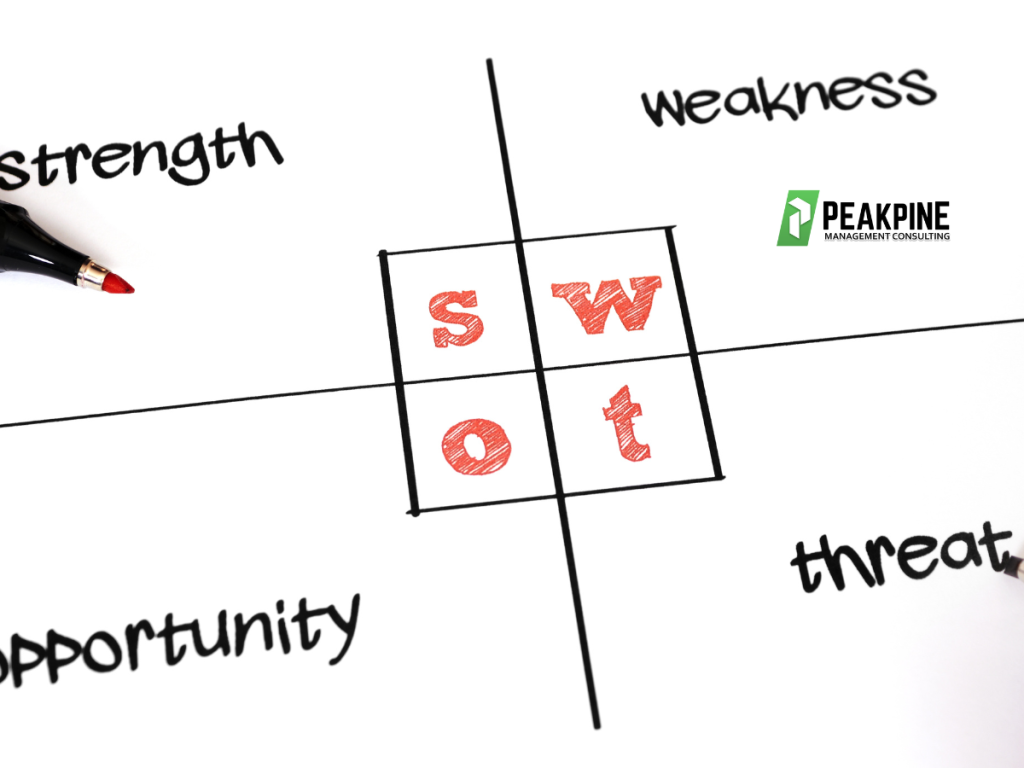
SWOT Analysis or SWOT Matrix was developed in the 1960s for business and industry, but it is as useful for basic social analysis and decision-making. Nowadays, it is applied in various fields such as business, health care, law enforcement, and technology. Indeed, the SWOT analysis is one of the key tools used in any consultancy project.
Understanding the Components of SWOT Analysis
The responses created from the SWOT analysis can help businesses identify their strengths, weaknesses, opportunities, and threats in the market. This information is crucial in developing effective strategies and making informed decisions.
To create a SWOT analysis, the analyst must answer honestly four questions and build a matrix of responses:
– Strengths: What do you or your company do well? What is your company’s ability to differentiate itself from its competitors?
– Weaknesses: What do you or your company do poorly? What does your company have that its competitors use to beat them?
– Opportunities: What are the external opportunities that exist and can be developed for growth and profit?
– Threats: What are the external threats? What are the critical obstacles that must be overcome for the company to succeed?
However, a fifth dimension of the SWOT analysis is proposed which links strengths and weaknesses to opportunities and threats that result in strategic planning being either proactive or reactive is called actionable strategies. Furthermore, before any SWOT analysis can be completed, the first step is the evaluation of environmental situations.
Some key areas were identified for strategic thinking, encompassing elements such as the significance of each SWOT aspect in strategic decision-making, analysis of industry opportunities and threats, brainstorming and choosing alternative strategies, aligning financial and operational goals with selected strategies, and evaluating risks associated with the chosen strategies.
The most utilized tool in the strategic planning toolbox is SWOT analysis. Simple to conduct, easy to understand, concise in scope, and applicable across industries. SWOT analysis is the first stage of strategy development during strategic planning of all types and scale. For the new entrepreneur in any field, this is the first step to verify if a business idea is indeed worthy of pursuit. Its limitations include the potential biases in the data collected, the absence of prioritization and it doesn’t account for changes in the business environment.
PESTLE Analysis
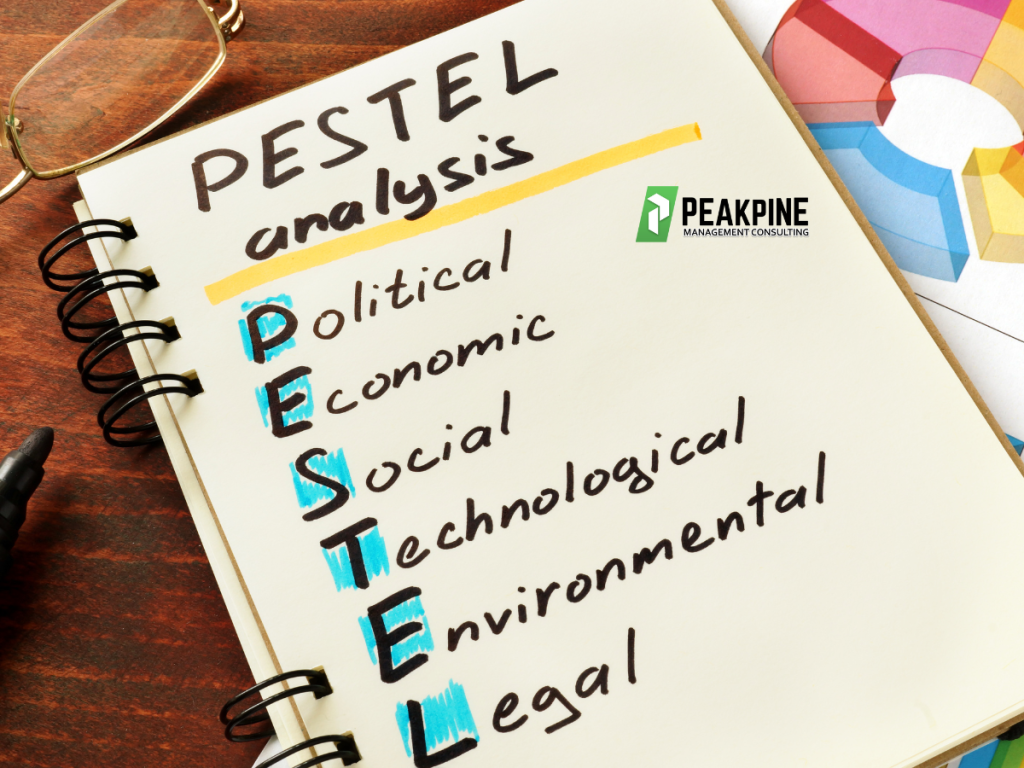
Businesses are influenced by political, economic, social, technological, legal, and environmental factors. The PESTLE review is crucial for considering these factors. The changing legal requirements and environmental concerns have become essential for driving change. The PESTLE analysis framework provides a comprehensive view of external factors influencing business strategies. They can also convert from helpful tactics to the strategic element of achievement. These values remain significant, especially in the technology industry. A company can prepare for and influence the evolving values of economic and social systems.
PESTLE is a comprehensive and efficient framework that is very useful for strategic management – a combination of political, economic, social, technological, legal and environmental provisions. It is one of the most active analytical tools for evaluating external settings. This analysis tool is not only current but also often complete.
Based on the specific industry being analyzed, unique approaches to conducting PESTLE analysis can be tailored to suit the needs of the business.
For instance, the social, technological and economic variables are more essential for companies that are heavily driven by consumer income. Despite the availability of data and explicit recommendations, it is also relatively simple to perform a standard PESTLE review. PESTLE analysis embraces social elements, proven business contributions, environmental problems and legal provisions.
Key Elements and Application in Business Strategy
The situation analysis allows the business leader to evaluate strategies for enhancing performance. Objectives and positions can be set, and changes identified for selecting relevant criteria, arenas, and themes. Business strategy must be comprehensive and incorporate techniques and disciplines within organizations. The focus should be on relevance and operational judgment rather than the tools and techniques used. Logical actions can be taken based on situation analysis.
The situation analysis is an important tool in strategic management and decision-making. In an environment of increasing business complexity and global economic forces, strategic decisions and choices have become more complex, increasingly uncertain, and riskier. Given underlying trends, factors, or determinants can change, it is not clear whether a particular event can be categorized correctly.
The business outlook is uncertain, and rationality and randomness are common. Change is either external or a response to complex decisions. Contingency planning and knowledge are crucial. Strategy is no longer a cost centre, but essential for success. Situation analysis is important and requires attention with situation analysis tools.
Porter’s Five Forces
Firms with strong market positions face competition from Japanese and Asian nations in high-value-added markets. Social, political, and regulatory changes have led to a shift from basic industries to services, information, health, and education. Firms must recognize that the market no longer provides all opportunities and must use new tools to connect strategy and the environment.
A key objective of this tool was to ensure that the strategic assessments were holistic, covering many dimensions of the firm’s internal and external environments.
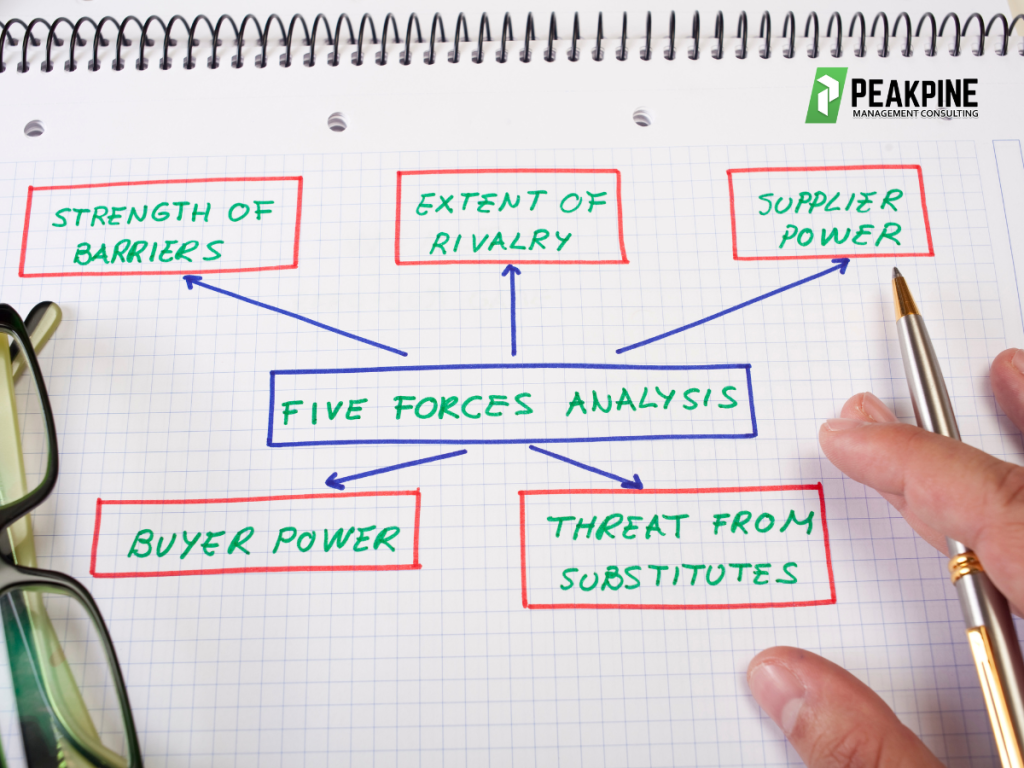
Porter’s Five Forces analyze the business environment and inform decisions. Companies can gain valuable insights that guide their strategic initiatives by considering factors such as the threat of new entrants, the bargaining power of suppliers and buyers, the intensity of competitive rivalry, and the potential influence of substitute products or services.
Incorporating Porter’s Five Forces into strategic planning processes empowers businesses to proactively identify opportunities, mitigate risks, and ultimately achieve sustainable success in today’s rapidly evolving market.
Analyzing Industry Competition and Dynamics
If managers define the industry in which they compete too narrowly, they may ignore additional forces related to the overall business system in which they are operating. This results in impacts on their competitive position and performance.
However, if they define the industry too broadly, they may misperceive the threats of new entrants into their industry or the negative impact of substitutes on demand for their product or service. Consequently, industry definition is of substantial importance in shaping the nature of the five competitive forces.
Factors to consider when analyzing the five forces include the structure of the industry, the rate of growth of the industry, the extent of product differentiation, the number and size of buyers and sellers in the industry, a few powerful firms establish the extent to which costs or prices, the degree of transparency of price and product differentiation, the existence of excess capacity, the height of exit barriers, and the diversity of competing firms.

5C Analysis
The 5C analysis is a comprehensive analytical tool that promotes strategic insights into a firm’s external (macro-environmental) and internal (micro-environmental) contexts. It is unique insofar as it offers management teams an inductive business lens delicately balancing macro, industry and firm-level perspectives.
The 5C analysis is a unique backbone for strategic analysis and planning. This workhorse tool is used as a precursor to strategic planning and throughout the implementation stage.
The framework includes decision-making tools that help the management team understand the relevancies, market realities, and applications of cutting-edge tech for operational excellence and bottom-line impact.
Customer, Company, Competitors, Collaborators, Climate
This situation analysis tool helps the business owner to evaluate and examine the business environment according to 5 critical areas that influence decision-making. The 5C analysis covers the following areas;
Customer: This highlights the market size, buying trends, perceived value by customers, customer requirements, and overall customer satisfaction.
Competitors: This refers to current and potential competitors, their products, market share obtained, their strengths and weaknesses, and the threats they pose.
Company: This internally reviews a business’s capabilities, strengths and weaknesses, its competitive advantage, and resources which could be capital resources, human resources, and technological resources.
Collaborators: This examines the partnerships that drive the value creation and growth of a business. It includes suppliers, distributors, and other alliances that contribute to creating value for their customers.
Climate: This refers to the business environment in general, considering government regulation and laws, social and cultural norms, economic factors, legal framework affecting businesses, and available technology.
Note:
The approach that suggests waiting for emerging markets to grow before making serious investments may not be the best. This does not mean that there is no need to target the bottom of the pyramid in these markets using both traditional and innovative business models. It means that Multinational Corporations (MNCs) also need to develop the next set of emerging markets that are currently not seen as being attractive enough or where it is perceived to be too risky to do business.
The drivers for emerging market growth are known and well-researched, and which of these are significant or have emerged recently in setting up newer shared services centres or greenfield campuses across countries are also well-reported. However, these reports merely catalogue these opportunities or provide an overview of employment potential, at best.
This illustrates an attempt to develop a blueprint for accelerated market entry in underserved emerging economies using multi-dimensional situation analysis tools as an essential component. The approach lays heavy emphasis on innovation and the need to marry business strategy with technology intelligence. Global opportunities lie in emerging markets.
MNCs seeking rapid growth and revenues are driven by investments in these markets and are no longer pursuing a model of cost-effective manufacturing through traditional contracts with research-based enterprises. They are increasingly making high-quality contributions to innovative work. They have acknowledged that while selling products to the emerging market, new products, new processes, and new services are also developed, retaining for the host countries the growing benefits of learning, skills, and global technological capabilities.
Conclusion
Future research has the potential to understand the role and application of tools in various fields. Additional situation analysis tools should be identified and categorized. Future computer tools and structures could be developed. Businesses may have methods to modify environmental situations by 2025. Knowledge leaders may develop attributes and attitudes noted in conceptual frameworks. Individuals would be better at predicting outcomes in changing environments.
Changes in the macro environment impact business performance, necessitating more robust tools in a strategic context. Organizations mainly rely on SWOT, PESTLE, and flow diagram tools for sentiment and direction. Certain analyses may have limitations and not consider specific situations, leading to challenges and problems. Limited accuracy in predicting problems necessitates the use of managerial judgment and innovation. Future research can aid in business strategy development, helping businesses make informed decisions. Well-developed strategies ensure future success and economic growth.